
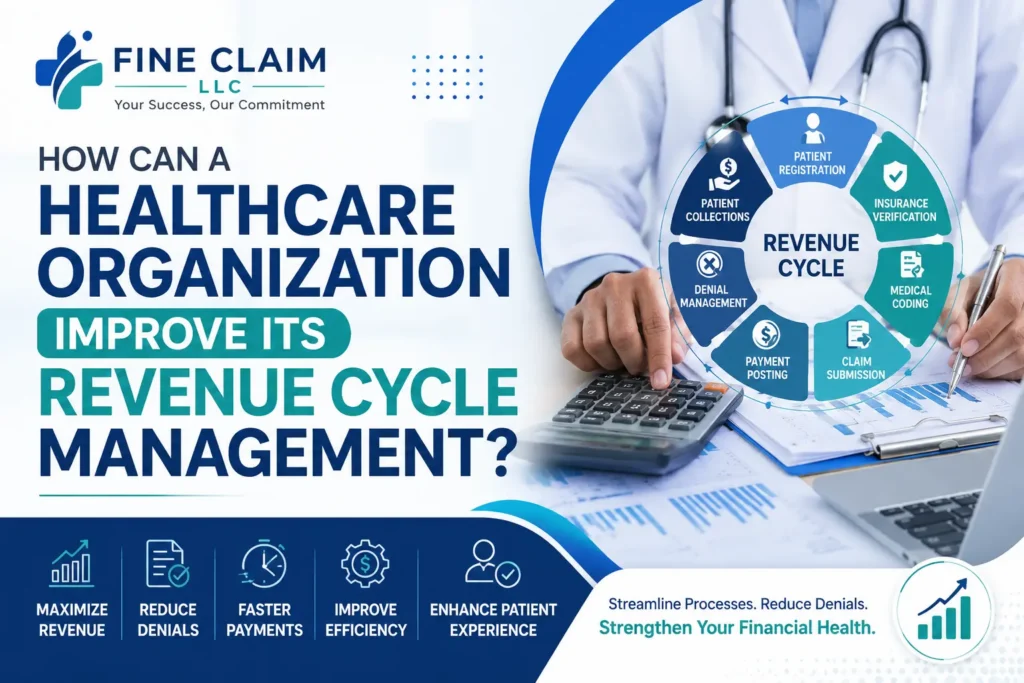
Healthcare organizations today face growing financial challenges, including increasing claim denials, changing payer regulations, staffing shortages, rising operational costs, and higher patient financial responsibility. These challenges make efficient Revenue Cycle Management (RCM) more important than ever.
A well-managed revenue cycle helps healthcare providers maximize reimbursements, improve cash flow, reduce administrative burdens, and maintain compliance while delivering quality patient care. Whether you’re managing a hospital, physician group, specialty practice, or healthcare system, optimizing your revenue cycle can significantly improve financial performance.
In this guide, we’ll explore practical strategies healthcare organizations can implement to strengthen their revenue cycle and achieve sustainable financial growth.
Understanding Revenue Cycle Management
Revenue Cycle Management (RCM) is the process of managing the financial journey of a patient, from appointment scheduling and insurance verification to claim submission, payment collection, and denial resolution.
The revenue cycle typically includes:
- Patient registration
- Insurance eligibility verification
- Medical coding
- Medical billing
- Claims submission
- Payment posting
- Denial management
- Accounts receivable follow-up
- Patient collections
Many healthcare providers invest in professional Revenue Cycle Management Services to improve operational efficiency and reduce revenue leakage throughout these stages.
Why Revenue Cycle Improvement Matters
An inefficient revenue cycle can lead to:
- Increased claim denials
- Delayed reimbursements
- Higher accounts receivable balances
- Lost revenue opportunities
- Poor patient experiences
- Compliance risks
Healthcare organizations that continuously optimize their revenue cycle often experience faster reimbursements, improved cash flow, lower denial rates, and stronger financial performance.
As healthcare reimbursement models continue evolving, providers must proactively address revenue cycle inefficiencies to remain financially competitive.
1. Strengthen Front-End Patient Registration Processes
The revenue cycle begins before a patient receives care. Errors during registration often create downstream billing and reimbursement problems.
Healthcare organizations should focus on:
- Collecting complete patient demographics
- Verifying insurance coverage before appointments
- Confirming referral requirements
- Obtaining prior authorizations
- Updating patient records regularly
Investing in accurate registration procedures and Insurance Eligibility Verification Services helps prevent claim rejections and reduces administrative rework.
Accurate patient data ensures that claims are submitted correctly the first time, improving clean claim rates and accelerating reimbursements.
2. Improve Medical Coding Accuracy
Coding accuracy directly impacts reimbursement outcomes. Even small coding errors can result in denials, underpayments, compliance issues, and delayed payments.
Healthcare organizations should prioritize:
- Certified coding professionals
- Ongoing coder education
- Documentation improvement initiatives
- Regular coding audits
- Compliance monitoring
Organizations that leverage specialized Medical Coding Services often achieve greater coding accuracy and stronger reimbursement performance.
Healthcare providers should also stay informed about industry coding standards and educational resources provided by the American Academy of Professional Coders (AAPC) and AHIMA, both of which help professionals maintain coding excellence and regulatory compliance.
Accurate coding not only improves reimbursement but also supports quality reporting and risk management efforts.
3. Implement a Proactive Denial Management Strategy
Claim denials continue to be one of the most significant revenue cycle challenges for healthcare organizations.
Many providers focus solely on appealing denials after they occur. However, the most successful organizations work to prevent denials before claims are submitted.
Effective denial prevention strategies include:
- Root cause analysis
- Eligibility verification
- Authorization management
- Coding reviews
- Claims scrubbing
- Staff education
Comprehensive Denial Management Services can help identify recurring denial patterns and implement corrective actions that reduce future revenue loss.
Additionally, healthcare organizations should regularly review reimbursement and policy updates from the Centers for Medicare & Medicaid Services (CMS) to remain compliant with payer requirements and avoid preventable denials.
A proactive approach to denial management can significantly improve collection rates and reduce accounts receivable days.
4. Invest in Revenue Cycle Automation
Technology plays a critical role in modern revenue cycle management.
Manual processes increase the likelihood of errors, delays, and inefficiencies. Revenue cycle automation helps organizations streamline operations and improve financial performance.
Automation can support:
- Eligibility verification
- Claims scrubbing
- Payment posting
- Prior authorization workflows
- Patient communication
- Revenue reporting
Many organizations implementing advanced Healthcare Revenue Cycle Solutions report improved productivity, reduced administrative costs, and faster reimbursement cycles.
Automation also allows staff to focus on high-value activities instead of repetitive administrative tasks.
5. Focus on Clean Claim Submission
Clean claims are claims submitted accurately and completely without requiring additional payer intervention.
Submitting clean claims should be a primary goal of every healthcare organization.
Best practices include:
- Verifying demographics
- Confirming insurance coverage
- Reviewing coding accuracy
- Checking payer requirements
- Utilizing claims editing software
Organizations that consistently submit clean claims experience fewer denials, quicker payments, and improved revenue cycle efficiency.
Combining clean claim initiatives with professional Medical Billing Services can further enhance reimbursement performance and reduce claim errors.
6. Optimize Accounts Receivable Management
Outstanding accounts receivable can negatively impact cash flow and financial stability.
Healthcare organizations should closely monitor receivables and implement structured follow-up processes.
Key strategies include:
- Prioritizing aging accounts
- Tracking unpaid claims
- Escalating payer disputes
- Monitoring collection performance
- Conducting regular AR reviews
Dedicated Accounts Receivable Management programs help providers recover outstanding balances more effectively while reducing reimbursement delays.
Organizations should routinely evaluate AR metrics to identify trends and improve collection efficiency.
7. Enhance Patient Collections Processes
Patient financial responsibility has increased significantly in recent years, making patient collections a critical component of revenue cycle success.
Providers should adopt patient-friendly collection strategies that encourage timely payments while maintaining positive patient relationships.
Recommended approaches include:
- Transparent billing statements
- Online payment portals
- Flexible payment plans
- Automated payment reminders
- Financial counseling services
Professional Patient Collections Services can help organizations improve collection rates while preserving patient satisfaction.
Clear communication about financial responsibilities before treatment can also reduce confusion and improve payment outcomes.
8. Utilize Revenue Cycle Analytics and Reporting
Healthcare organizations cannot improve what they do not measure.
Revenue cycle analytics provide valuable insights into financial performance and operational efficiency.
Important metrics include:
- Days in Accounts Receivable
- Net Collection Rate
- Denial Rate
- First Pass Resolution Rate
- Clean Claim Rate
- Bad Debt Percentage
Advanced reporting tools help organizations identify bottlenecks, uncover revenue leakage, and improve decision-making.
Many healthcare finance leaders rely on educational resources and benchmarking data published by the Healthcare Financial Management Association (HFMA) to evaluate and improve revenue cycle performance.
Data-driven decision-making is essential for long-term revenue cycle success.
9. Strengthen Compliance and Risk Management
Compliance remains a fundamental aspect of effective revenue cycle management.
Failure to comply with regulatory requirements can result in audits, penalties, payment recoupments, and reputational damage.
Healthcare organizations should implement:
- Internal audits
- Coding reviews
- Documentation assessments
- Compliance education
- Policy updates
Regular Coding Audit Services can help identify compliance risks and improve documentation accuracy.
Healthcare leaders should also monitor guidance and compliance recommendations issued by the Office of Inspector General (OIG) to stay informed about regulatory expectations and risk mitigation strategies.
Strong compliance programs protect both revenue and organizational reputation.
10. Partner with an Experienced Revenue Cycle Management Company
Many healthcare providers struggle to maintain optimal revenue cycle performance due to staffing shortages, resource constraints, and increasing reimbursement complexity.
Partnering with an experienced RCM company provides access to:
- Industry expertise
- Advanced technology
- Certified specialists
- Scalable support
- Proven best practices
Comprehensive End-to-End Revenue Cycle Management solutions can help healthcare organizations improve collections, reduce denials, optimize workflows, and increase profitability.
Outsourcing selected revenue cycle functions often enables providers to focus more on patient care while improving financial outcomes.
Key Benefits of Improving Revenue Cycle Management
Healthcare organizations that invest in revenue cycle optimization can achieve several measurable benefits.
Financial Benefits
- Increased revenue capture
- Reduced claim denials
- Improved reimbursement rates
- Faster payments
- Better cash flow
Operational Benefits
- Increased efficiency
- Reduced administrative burden
- Improved staff productivity
- Better reporting capabilities
Patient Benefits
- Greater billing transparency
- Improved payment options
- Enhanced communication
- Better overall patient experience
Frequently Asked Questions
What is the best way to improve revenue cycle management?
The most effective approach involves strengthening patient registration, improving coding accuracy, implementing denial prevention strategies, automating workflows, and utilizing data analytics to identify performance gaps.
Why is denial management important in revenue cycle management?
Denial management helps healthcare organizations recover lost revenue, identify recurring issues, reduce claim rejections, and improve reimbursement outcomes.
How does medical coding affect revenue cycle performance?
Accurate coding ensures proper reimbursement, minimizes denials, reduces compliance risks, and improves overall financial performance.
Can automation improve healthcare revenue cycle management?
Yes. Automation streamlines administrative tasks, reduces manual errors, accelerates claim processing, and improves operational efficiency.
Should healthcare organizations outsource revenue cycle management?
Many providers benefit from outsourcing because it provides specialized expertise, advanced technology, scalability, and improved financial performance.
Conclusion
Improving Revenue Cycle Management requires a comprehensive approach that addresses every stage of the patient financial journey. From accurate registration and coding to denial prevention, automation, analytics, and compliance management, each component plays a critical role in maximizing reimbursement and strengthening financial performance.
Healthcare organizations that prioritize continuous improvement and invest in strategic Revenue Cycle Management Services, Medical Billing Services, and Denial Management Services position themselves for long-term success in an increasingly complex healthcare environment.
At Fine Claim LLC, we help healthcare providers optimize every aspect of the revenue cycle, enabling them to reduce denials, increase collections, improve cash flow, and focus on delivering exceptional patient care.